11 Best Product Management Tools | Ranked by Use Case (2026)
Compare 11 best product management tools across feedback, roadmaps, agile, and strategy — pricing, AI features, and use-case picks for SaaS teams in 2026.
Product Management

Product management tools are software platforms that help teams to draw a product strategy, build roadmaps, priortize the features, manage backlogs, and control the overall workflow of product planning, development, and improvement. They centralise the whole process.
The core capabilities of product management tools are:
Roadmapping
AI-powered feedback management
Feedback collection
Backlog management
Prioritization
Release planning
Some best product management tools like ProductBridge, Jira, Aha!, Asana, Notion, Productboard, Airfocus, Linear, etc. Each of them is best for certain aspects of product management.
TL;DR
The best product management tools in 2026 are ProductBridge, GoodDay, Jira, Aha!, ClickUp, Asana, and Notion.
For customer feedback collection, organization, and prioritization - ProductBridge and Productboard are the best tools. If you are looking for Agile management and backlog control, GoodDay, Jira and Linear are the best product management tools. If yours is an enterprise-level strategic roadmapping, Aha! And ProductPlan are the right product management tool, and for all-in-one workspaces for cross-functional collaboration, ClickUp and Asana are two of the best product management tools.
The right tool depends upon the volume of the feedback you get, how fast your team is scaling, and your strategy of execution.
Key Takeaways
ProductBridge is the best product management tool for customer feedback collection and management, project roadmaps, and prioritizing features with robust AI-powered capabilities.
GoodDay, Jira and Linear are some product management tools that are good for agile execution and help in sprint planning, backlog management, and delivery.
The best product management tools are ProductBridge, Aha!, and ProductPlan for teams that focus on strategic roadmapping.
The best tools for product management assist SaaS teams with strong AI features that help in effective feedback closing and help in product growth.
What Are The Best Product Management Tools in 2026?
ProductBridge, GoodDay, Aha!, Jira, Linear, ProductPlan, ClickUp, Productboard, Airfocus, and similar other tools are the best product management tools since each of them helps teams structure product decisions, turn customer insights into outcomes, and manage workflows across engineering and business teams.
While all of them are the best tools for product management, they differ in their services; some of them are best for feedback closing, some of them for product planning, and some for agile workflows.
Tool | Best for |
ProductBridge | Teams that want customer feedback are directly connected to product strategy and roadmap decisions. |
GoodDay | Teams that need all-in-one Agile product management combined with time tracking. |
Productboard | Product teams that prioritize features based on structured customer insights. |
Airfocus | Teams that rely on scoring frameworks like RICE for data-driven prioritization. |
Jira | Agile teams need strong sprint planning and backlog management. |
Linear | Fast-moving startups that want lightweight issue tracking with speed. |
Aha! | Enterprises managing long-term strategy across multiple product lines. |
ProductPlan | Teams focused on visual roadmaps for leadership and stakeholder alignment. |
ClickUp | Cross-functional teams that want an all-in-one workspace for tasks and planning. |
Monday.com | Organizations that need strong collaboration between product, marketing, and operations. |
Asana | Teams that value structured planning, ownership clarity, and goal tracking. |
Notion | Early-stage teams that want simple documentation and lightweight product management. |
Types of Product Management Tools
Some of the best product management tools focus on sprint execution, while others focus on long-term strategy, and some on connecting customer feedback to roadmap decisions. So the categories of the best product management tools differ. Understanding these categories helps you choose the right tool for your product management.
In this guide, we discuss about the best tools for product management across the following categories:
Customer feedback management
Product strategy
Roadmapping and Planning
Execution and delivery
Cross-functional product workspaces
Customer Feedback Management Tools
The best product management tools for customer feedback are:
ProductBridge
Productboard
Airfocus
ProductBridge
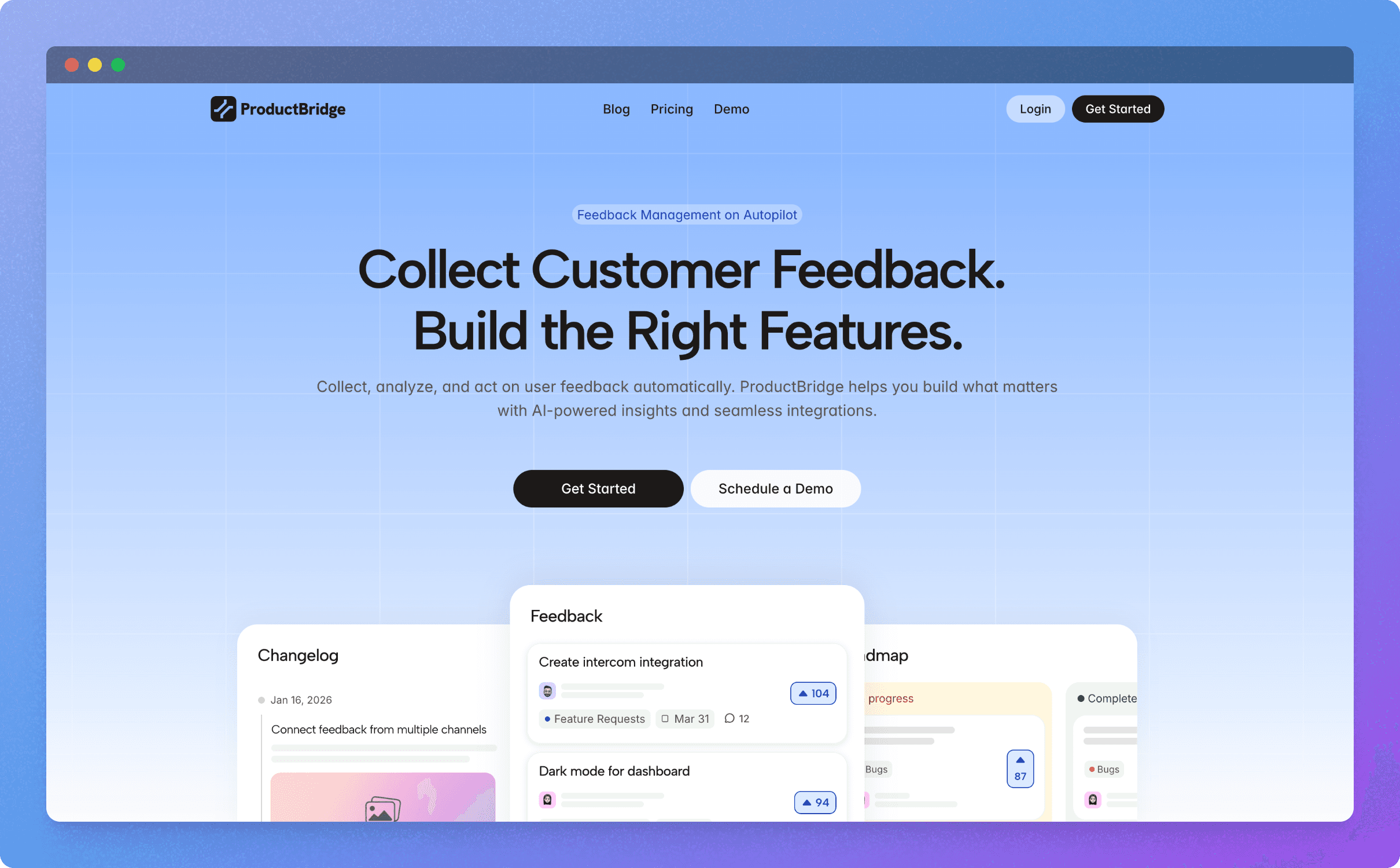
ProductBridge is a customer-driven product management tool that focuses on turning customer feedback into product strategy and roadmap planning. The best part of ProductBridge is that it offers a strong AI-powered feedback categorization (AutoBridge) along with deeper automation. This is especially useful for modern teams to reduce the burden of manual categorisation, duplicate detection, and prioritisation, among other tasks.
Not only does ProductBridge manage the feedback, but it also enables changelog releases, driving more informed and direct communication with users, which increases customer trust.
It links feedback, prioritization, and roadmap execution, which are the major parts of product management. That is why ProductBridge is the best product management tool trusted by thousands of companies worldwide.
Core Capabilities
AI-Powered feedback categorization
Prioritization frameworks
Roadmap alignment
Feedback collection from multiple sources
Integrations with multiple SaaS platforms
Pros
Public and private boards for user ideas
Upvotes and prioritization signals
Autobridge AI for major tasks
Custom status workflows
Cons
Relatively new in the market
Advanced AI might not suit teams that need simple management
Productboard
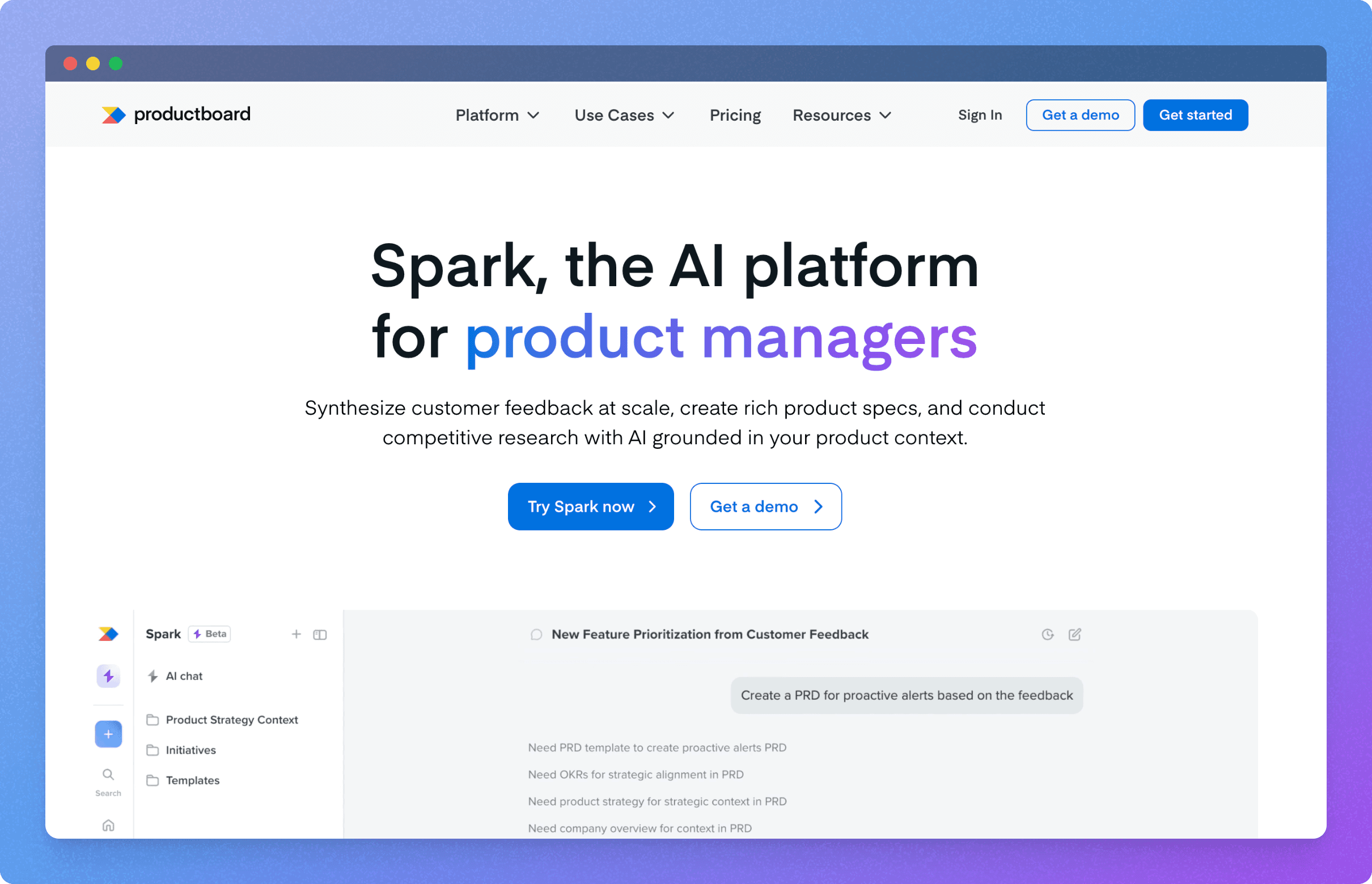
Productboard is also a similar platform to Productbridge. It centralizes customer feedback collection and product planning, and also integrates AI for a better team experience. Spark, it's AI features help teams conduct competitive research for better product growth. The feedback is collected from multiple sources and centralised.
Productboard combines and focuses on both business impact and customer satisfaction, and on the basis of these, it prioritizes the features, so that product development is mutually beneficial. The AI feature can summarize the feature requests from the users to understand their requirements better.
Core Capabilities
Customer feedback aggregation from multiple sources
AI-powered feedback summarization
Collaboration with customizable boards
Roadmap planning
Mutually beneficial task prioritization
Pros
Centralized product planning
Complex product operations for enterprise-level
Structured scoring models for transparent prioritization
Integration with multiple tools
Cons
Small teams might find it complex
No agile sprint management’
Flexibility is restricted to customizable prioritization tools
Airfocus
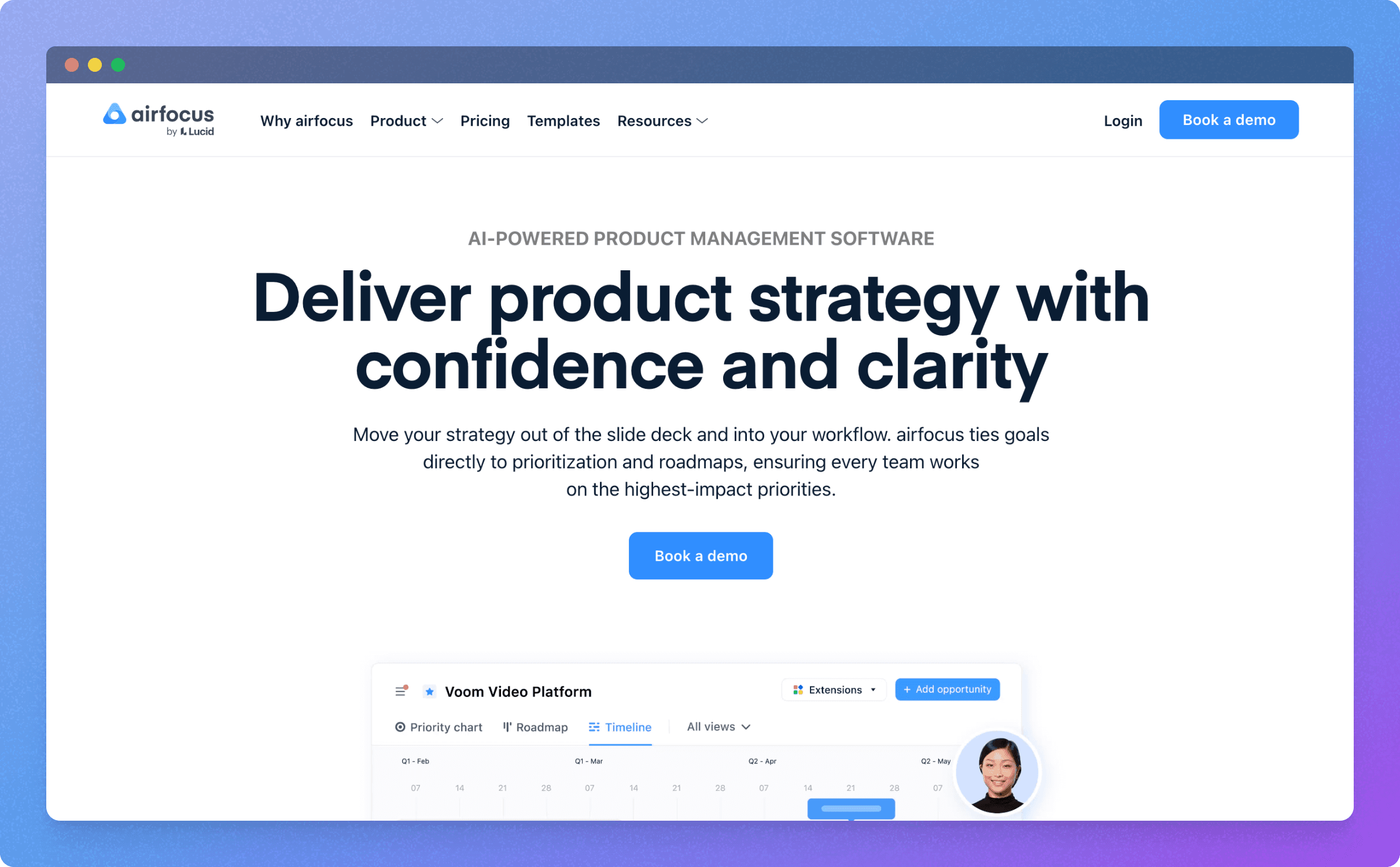
Airfocus is a strategic product management tool that integrates AI-powered product management to help teams work on the highest-impact priorities. It keeps everything you need for roadmapping in one place, just like the other two best product management tools.
Airfocus offers flexible filters and sharing options, allowing teams to share interactive, real-time roadmaps in different formats to give every stakeholder the visibility they need. Also, you can trace any roadmap back to its source and insights, to again help the stakeholders understand ‘why’ behind the feature prioritization.
Core Capabilities
Customizable product hierarchies, fields, and views
Seamless migration and custom Jira field mapping
Visual roadmaps linked to scored initiatives
Multiple SaaS tools integrations
Arifocus AI to generate ideas and analyze sentiment
Pros
Modular workspace system (so there is no force on a fixed structure)
Flexible prioritization models
AI capabilities
Easy to get started for new users
Cons
Requires clearly defined scoring logic
High cost for advanced features
Not heavy customer feedback ingestion
Best Customer Feedback Management Tools By Use Case
Tool | Best For |
ProductBridge | Strong AI-powered feedback management with advanced features and lower pricing |
Productboard | Large feedback volumes and structured prioritization |
Airfocus | Scoring frameworks like RICE or similar models to priortize roadmap decisions. |
Product Strategy Tools
Product strategy tools help teams to define their long-term goals, plan accordingly, and manage long-term product direction.
The best product management tools for the right product strategy are:
Aha!
ProductPlan
Aha!
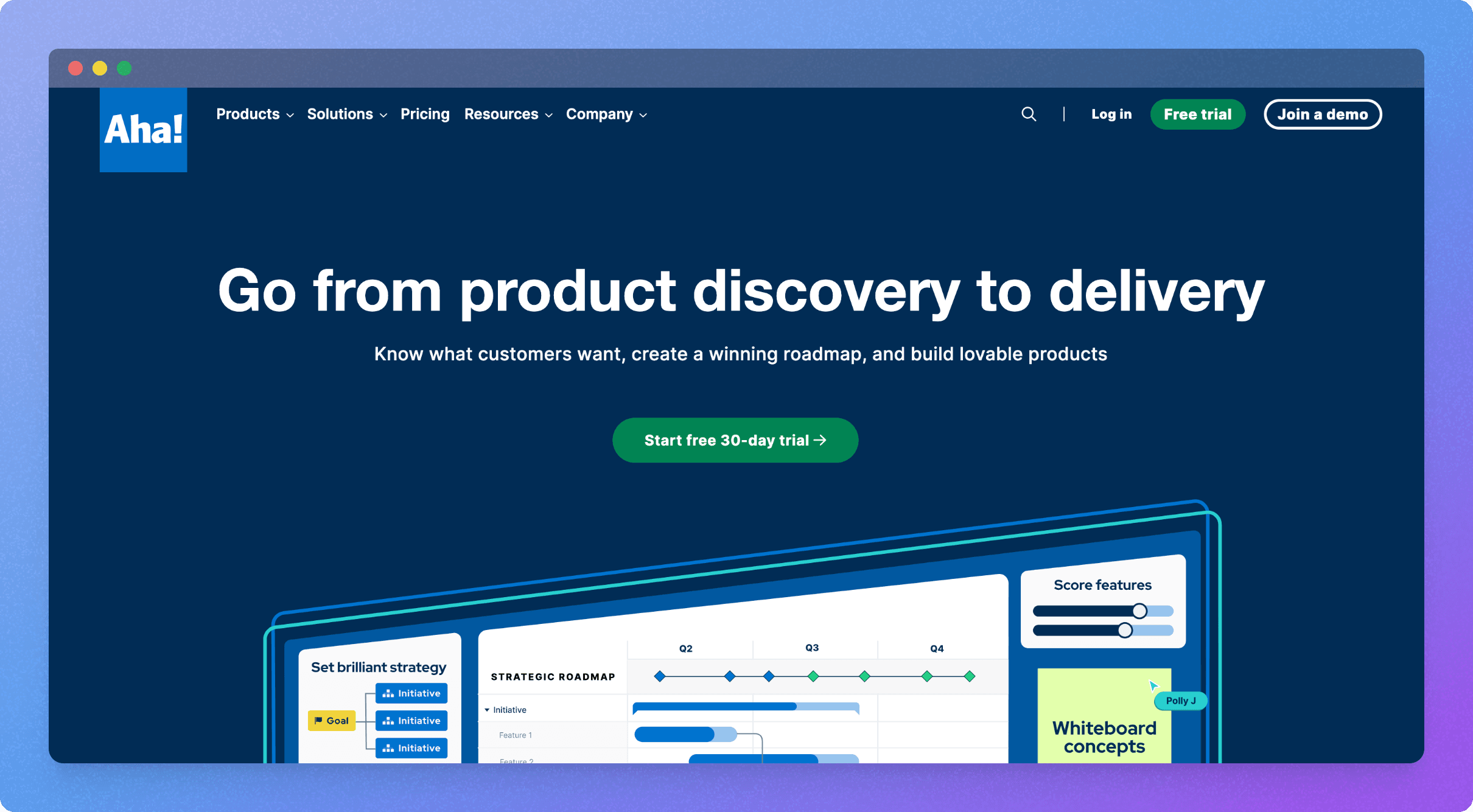
Aha is a product management tool built for enterprise-level organisations and, sometimes, suitable for mid-sized teams, for portfolio management and product strategy. It is used to map the initiatives to the product objectives and to manage multi-product roadmaps.
This is a strategy-first product management platform that supports capacity planning, release coordination, and executive reporting. The platform offers strategic capabilities and governance controls, and is better for teams with a formal product process. It provides strong long-term planning support.
Core Capabilities
Defining product visions, goals and initiatives setting
Integration with 40+ tools
Custom portal ideas collection
Automatic status updates
Product management reports, 75+ pre-built
Pros
An AI-assistant to understand what customers value
Research center to centralize customer interviews and learnings
Strong enterprise-level strategic planning
Customizable workflows and roadmaps
Cons
Might be complex for new users
Pricing increases for advanced features
High overhead chances for single-product or small teams
ProductPlan
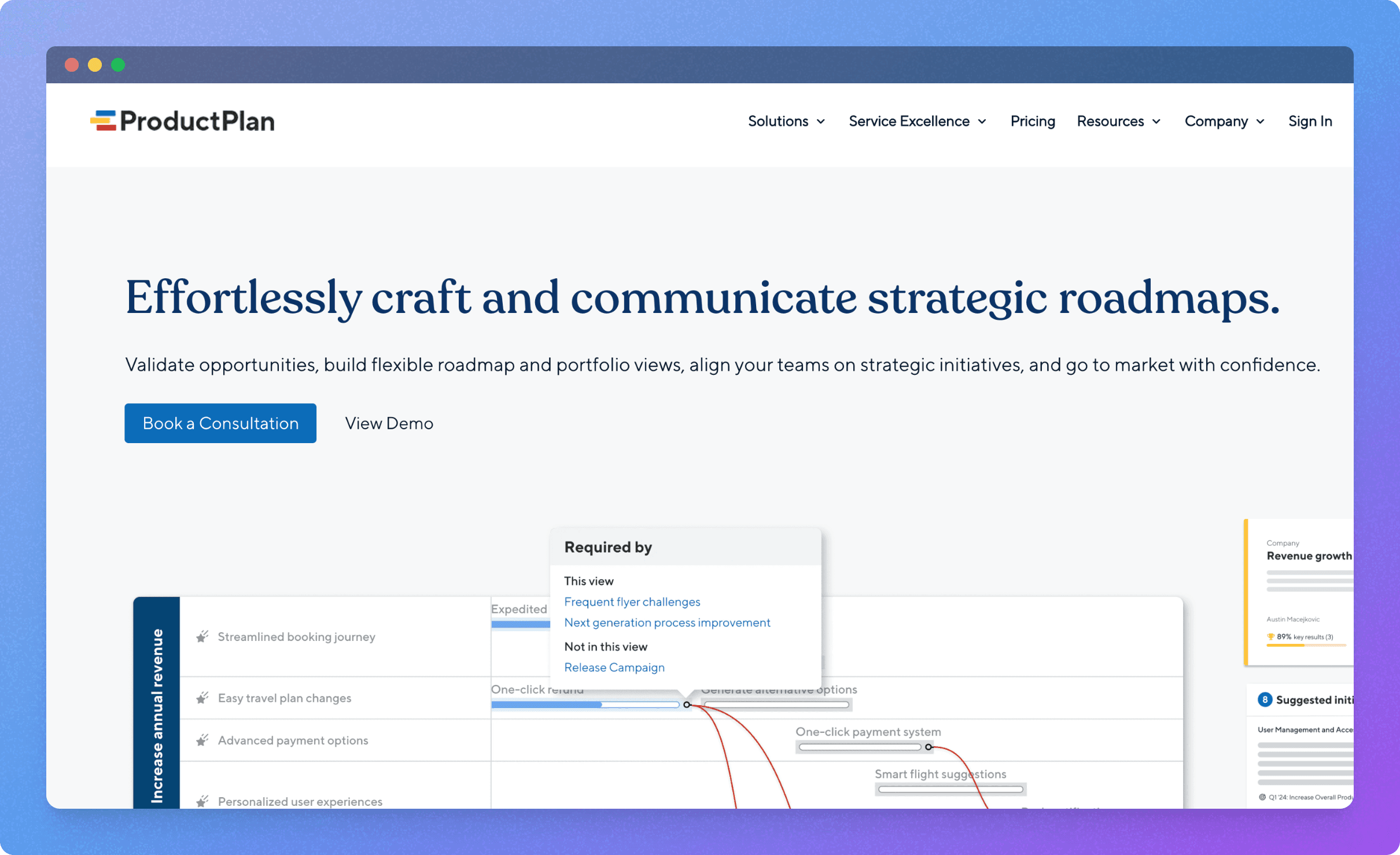
ProductPlan is a product management tool built for aligning teams on strategic initiatives and building flexible roadmaps and portfolio views. It focuses on visual planning and stakeholder communication. The recent updates include the introduction of basic AI-assisted features in this platform.
Its primary strength lies in roadmap communication and timeline-based roadmaps, initiative grouping and customizable layouts. You can also build your own integrations with other platforms through Rest API access for those that are not already in ProductPlan’s integration library.
Core Capabilities
Private URL for live roadmap sharing
Centrally managed roadmap legends and tags
Unlimited collaboration between users for roadmaps
Timeline-based roadmap creation
Drag-and-drop initiative planning
Pros
Clean roadmap visualization
Unlimited roadmaps creation by users
Strong collaboration capabilities
Strong focus on presentation clarity
Cons
Limited tools in the integration library
May not be a full-featured product management tool
Fewer automations in the workflow
Best Product Strategy Tools By Use Case
Tool | Best For |
Aha! | Managing multi-product plans with goal alignment ad executive level visibility |
ProductPlan | Clear presentation of roadmaps for stakeholder communication without heavy, complex layers in product management |
Execution and Delivery Tools
These product management tools help teams to manage backlogs and sprint cycles, track issues and feature releases.
While customer feedback tools focus on closing the feedback loop, and product strategy tools focus on planning the growth, these execution and delivery tools focus on turning roadmap commitments into shipped product increments.
The best product management tools for execution and delivery are:
GoodDay
Jira
Linear
GoodDay
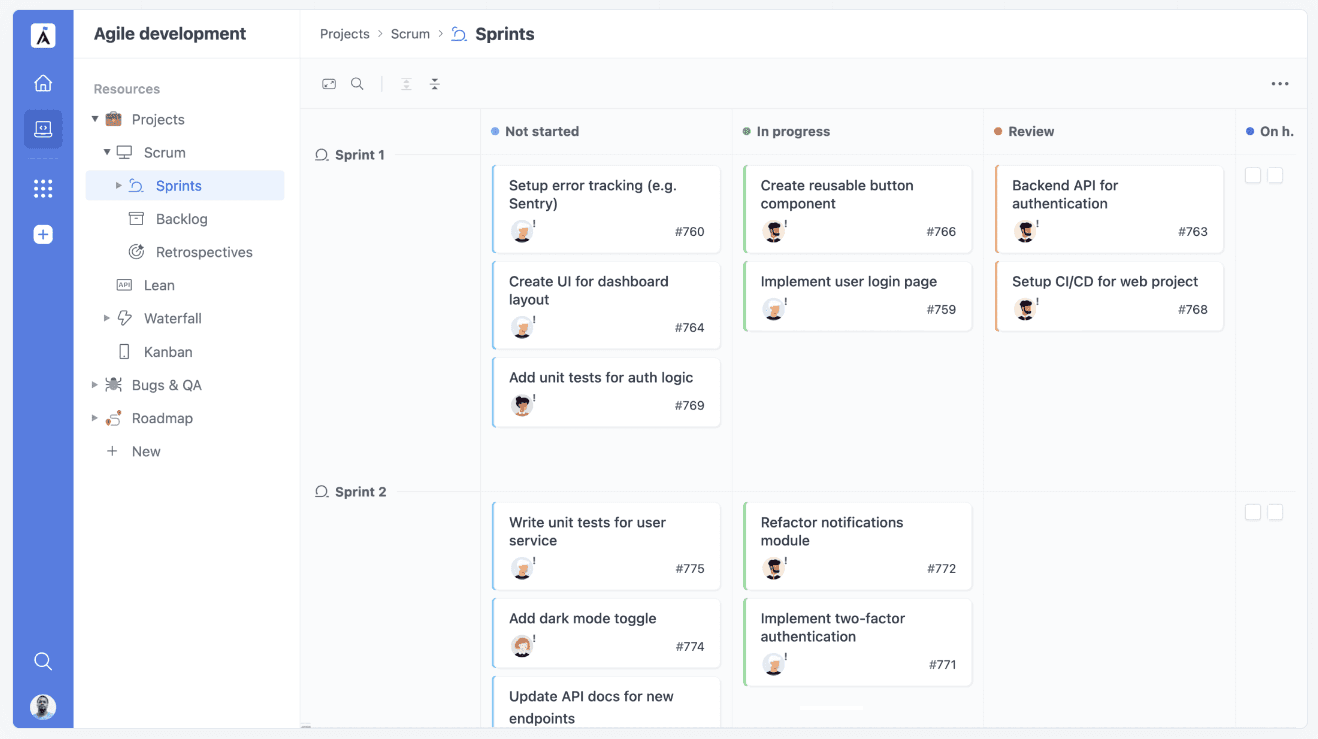
GoodDay is an all-in-one Agile project management platform that combines iterative delivery with broader project planning capabilities.
Teams can manage product backlogs, sprints, tasks, priorities, dependencies, and workflows while working with Scrum, Kanban, and other project management approaches.
Core Capabilities
Agile sprint and backlog management
Workflow automation
Unlimited project hierarchy
Time tracking and reporting
CRM and customer portal
Integrations & API access
AI chat and agents
Pros
Extensive customization
Supports multiple project management methodologies
Covers planning, execution, tracking, and reporting
Free for up to 15 users, with Professional starting at $4 per user/month
Cons
Teams need to configure the platform around their processes
Advanced reports require initial setup
It takes time to learn how to utilize advanced workflows
Jira
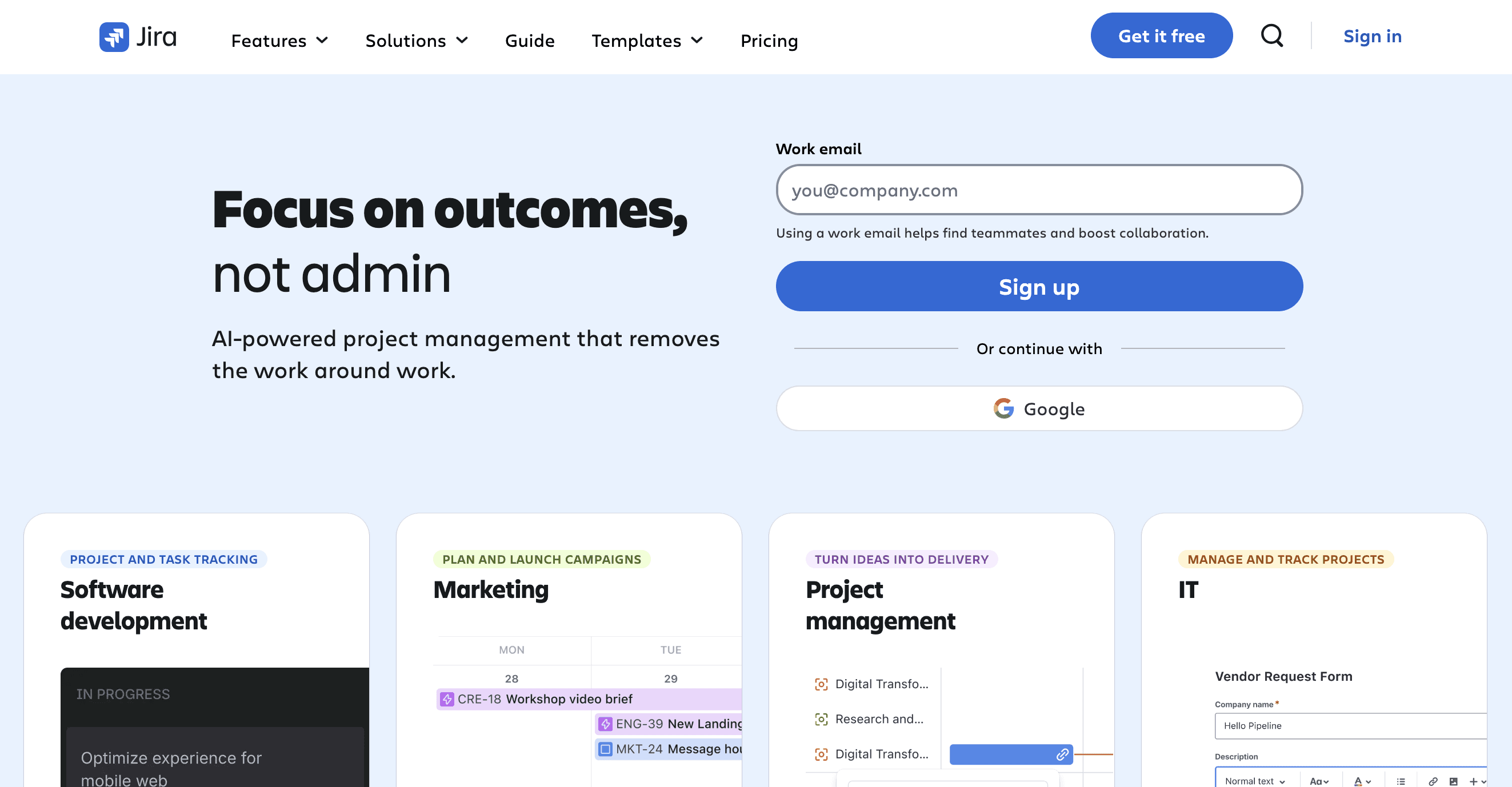
Jira is a widely recognized product management tool for Agile execution. Sprint planning, backlog grooming, workflow customization, and integration with development tools. This tool is commonly used in engineering-led teams for effective team collaboration.
With Jira, teams can customize their workflows, plan, track and release the software with effective project management. It allows organizations to define their own stages, approvals, and status transitions and is suitable for both startups and large teams.
Core Capabilities
Structured tracking from planning to release
Built-in sprint boards
Integrations with DevOps platforms
Backlog grooming and prioritization
Release planning and version tracking
Pros
Strong agile execution and sprint cycles
Suitable for all team sizes
Effective bug tracking
Allows cross-functional team collaboration
Cons
Not customer feedback focused
Strong and better only for agile teams
Extensive feature set comes at a high cost
Linear
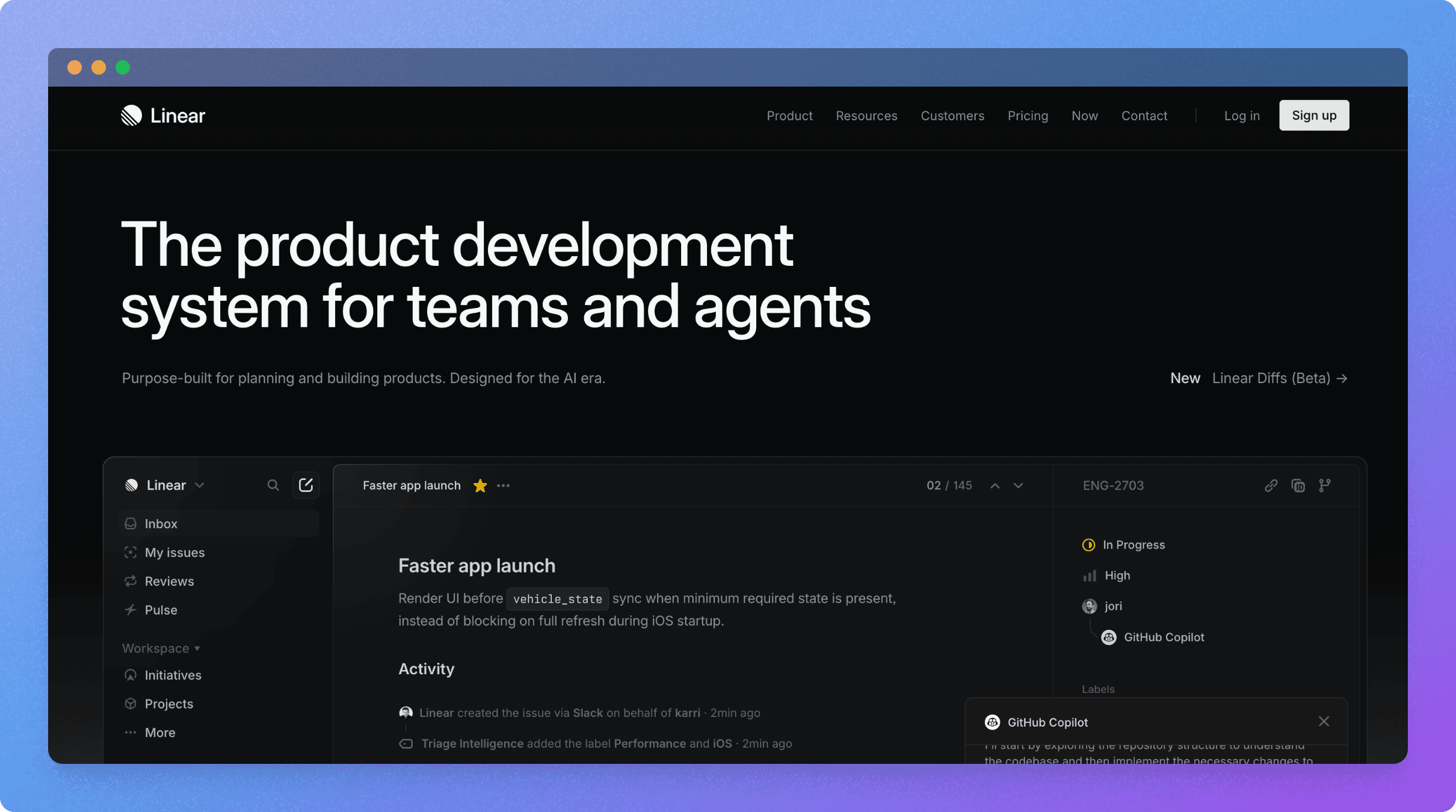
Linear is a system for product development, product planning, and building. This product management tool is purpose-built for modern teams with AI workflows. It allows the teams to plan and navigate from idea to launch. Teams can align with product initiatives, strategic roadmaps, and other essential things needed for execution and delivery.
Like Jira, Linear also supports Agile workflows and offers backlog organization, sprint cycles, etc. It integrates with development tools like GitHub and GitLab to ensure development is connected to product tasks.
Core Capabilities
Integrations with DevOps platforms
Roadmap planning and bug triage
Cross-functional collaboration
Issue, bug, and ticket management
Team-based access controls
Pros
Minimal UI, clean, and easy to set up
Strong integrations to connect development with planning
Good for agile teams
Strong task management
Cons
Might not suit teams looking for extensive reporting
Limited customization
Lack of reliable customer support
Best Execution and Delivery Tools By Use Case
Tool | Best For |
Jira | Agile sprint planning, backlog control, and deep DevOps integration |
Linear | Lightweight, high-performance issue tracking with minimal configuration |
Cross-Functional Product Workspaces
This category of cross-functional product workspaces includes the tools that help teams collaborate, document, and plan, all through a single platform. These tools are more likely to centralize product initiative tracking alongside marketing and design workflows.
Some of the best tools for this category are:
ClikcUp
Monday.com
Asana
Notion
ClickUp
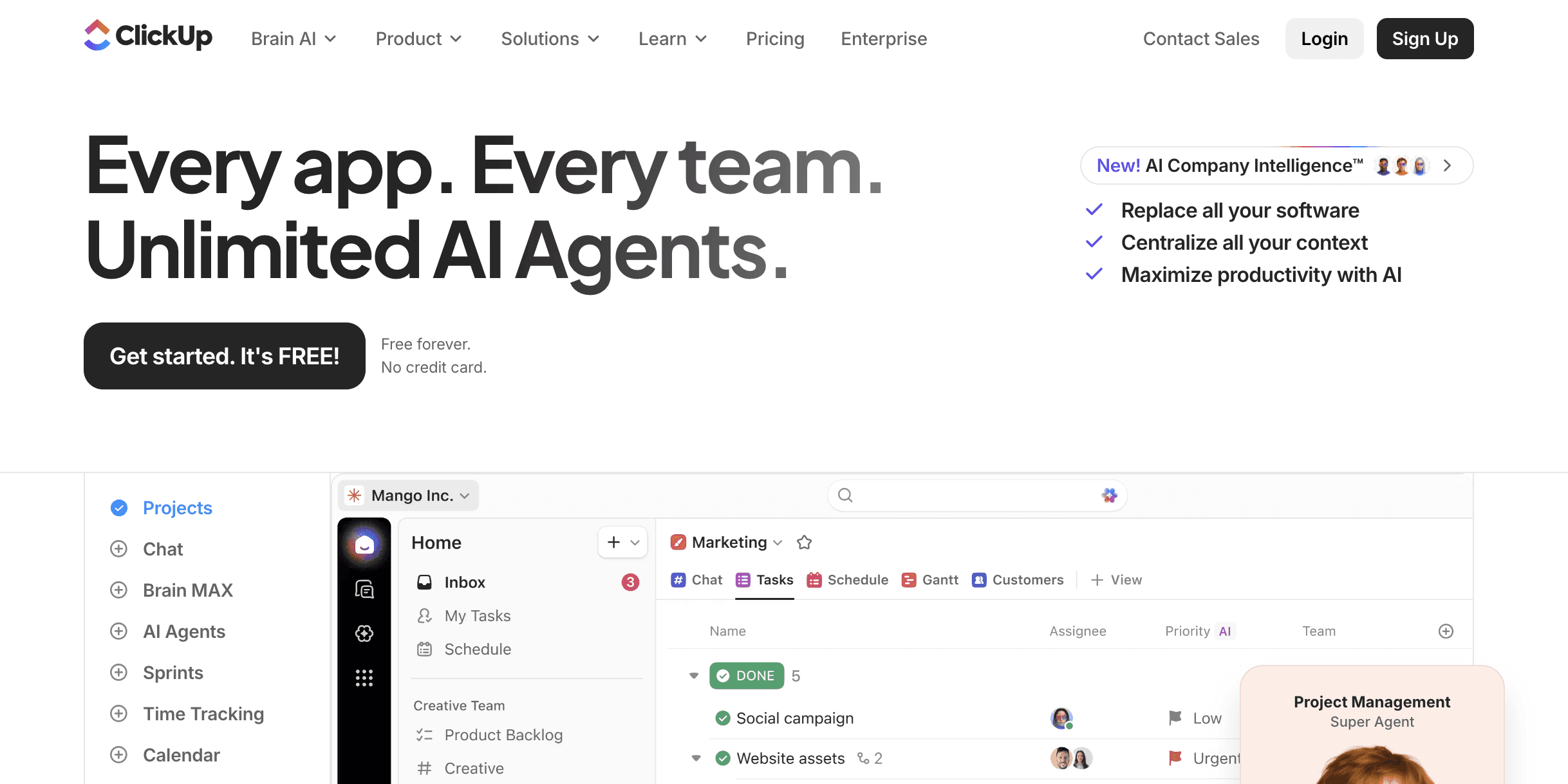
ClickUp covers complete work management within a single platform. From managing tasks to automation workflows, this product management platform adapts to various team structures and is suitable for startups to mid-sized organizations.
With ClickUp, teams can manage product, engineering, marketing, and operations within a single platform. With real-time collaboration tools, integrated docs and whiteboards, goals tracking, ClickUp supports complete end-to-end management.
Core Capabilities
Sprint and agile support
Integrations with hundreds of tools
‘ClickUp Brain’ as an AI assistant
Customized tasks and breakdown
Real-time dashboards visualization with reporting
Pros
All-in-one platform
Free plan included
AI assistance
Kanban boards and high customization levels
Cons
New users might find it difficult
Limited time tracking
Minimal and cluttered UI for dashboards
Monday.com
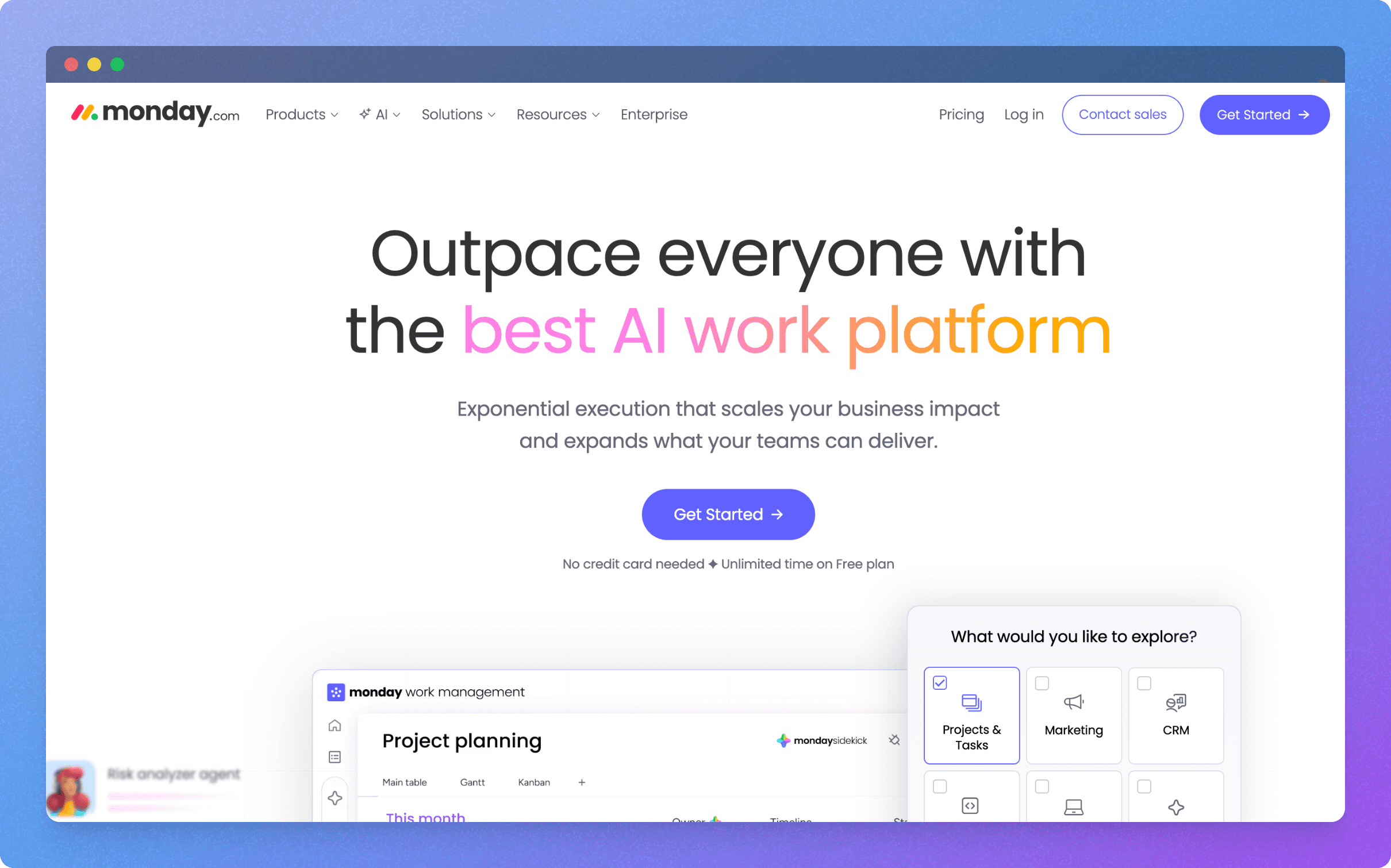
Monday focuses on AI-driven planning, execution and delivery. It offers agentic workflows that run work end-to-end. This product management tool heavily focuses on offering AI-powered execution and delivery. It allows board-based workflows and allows product, marketing, operations, and leadership teams to collaborate in a more structured manner.
It excels at operational coordination between teams and helps in effective project management. It is a cloud-based Work Operating System. It allows users to create their own applications and software. So overall, Monday is an end-to-end product management platform that focuses on bringing good management across the teams for better workflow.
Core Capabilities
Visual workflow boards and rule-based automation actions
No code customization
Drag and drop, interactive timeline, task dependencies
200+ integrations for boosted collaboration
Auto-assign tasks and custom automations
Pros
Flexible workflow customization
Start with a template, automate, and integrate
Large number of integrations
Cross-team collaboration
Gantt-style views
Cons
Shallow product strategy
Pricing improves as team size grows
Automations mostly include repeated actions
Asana
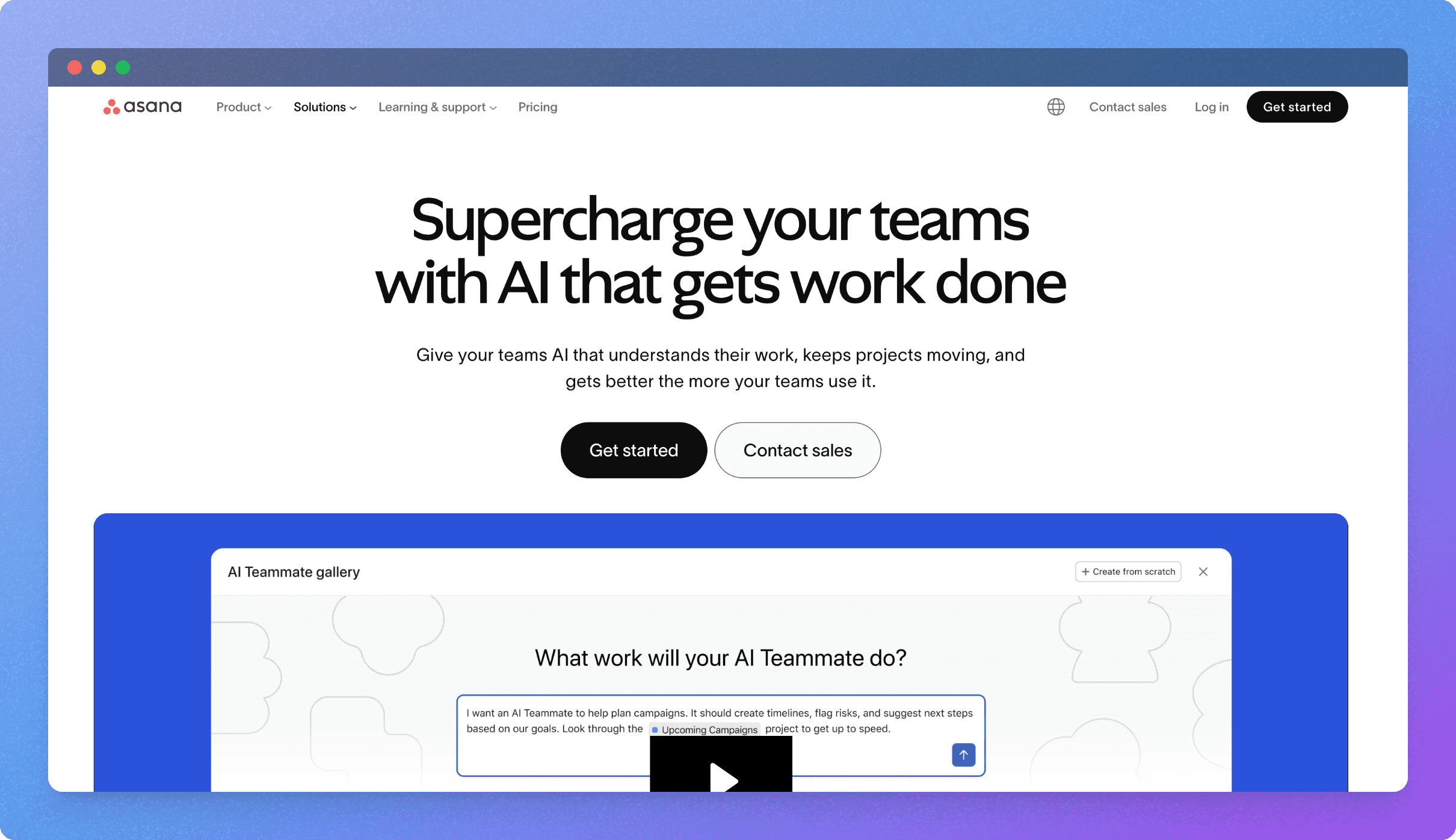
Asana is again a structured workflow management platform that automates workflows across departments, connects work to company-wide goals, and centrally manages users with security. This platform mainly focuses on accountability and visibility across teams.
Asana is one of the leading platforms in work management for its collaborative project management for teams irrespective of their team sizes, and helps them and stakeholders collaborate faster to achieve business objectives.
Core Capabilities
Custom project templates with AI
Asana AI for handling works
300+ integrations with enterprise tools
Resource management, goals, and reports
Project and task management
Pros
Built-in time tracking feature
Extensive integration feature
Enhances team collaboration
Strong task hierarchy
Cons
Not Agile sprint execution
Complex layers of volumes of projects
Limited native customer feedback aggregation
Notion
Notion is a flexible product management platform that helps with documentation, project tracking, and collaboration in a single environment. Teams can design their own workflows. Without committing to full product management software, Notion supports task tracking and planning.
This platform automates repetitive work, and as you assign tasks, the Notion agent works. It acts as a note-taking, knowledge management, and project management tool, and builds a custom tool.
Core Capabilities
AI-powered summaries
Extensive integrations with other tools
Progress-tracking with boards
Meeting notes taken with template use
Relational databases with customization
Pros
Strong documentation and knowledge management
Suitable for startups and mid-sized teams, easy to set up
Clean and modern user interface
Affordable for early-stage teams
Cons
No structured Agile sprint execution
Shallow release management depth
File upload limits in the free plan
Comparison Between The Best Product Management Tools
Tool | Customer Insight Handling | Strategic Planning | Roadmap Strength | Delivery & Sprints | Cross-Team Coordination |
ProductBridge | Designed to collect and structure feedback with prioritization workflows | Connects validated feedback directly to roadmap initiatives | Roadmaps built around feedback signals | Does not manage sprints | Supports basic collaboration around roadmap decisions |
GoodDay | Product requests and related information can be managed within projects and workflows | Goals, dashboards, project hierarchy, and planning tools support longer-term work | Gantt, timeline, Kanban, and other views connect plans with execution | Strong Agile support with sprints, backlogs, tasks, dependencies, and custom workflows | All-in-one workspace combines project planning, tasks, documents, time tracking, resources, and reporting |
Productboard | Centralizes large volumes of customer feedback with tagging and segmentation | Prioritization frameworks help evaluate features strategically | Customer-driven roadmap views | Relies on Jira or similar tools for sprint delivery | Commenting and stakeholder sharing are built in |
Airfocus | Organizes insights, but not a full-scale feedback intake hub | Strong scoring models (RICE, custom weighting) for decision logic | Roadmaps directly linked to prioritization scores | Execution requires integration with external tools | Standard team-level collaboration features |
Aha! | Feedback supported through the Ideas module | Full portfolio hierarchy (goals → initiatives → features) | Advanced multi-product roadmapping | Sprint management available through Aha! Develop | Structured collaboration with reporting and whiteboards |
ProductPlan | Does not manage structured customer feedback | Supports initiative-level alignment | Strong timeline-based roadmap visualization | No sprint tracking capabilities | Roadmap sharing for stakeholders |
Jira | Issues can represent requests, but not structured feedback workflows | Strategy is typically managed outside Jira | Release and version planning are available | Full Agile sprint management and backlog control | Comment-based collaboration within tasks |
Linear | Issues may represent feedback informally | No built-in portfolio strategy hierarchy | Basic roadmap overview | Lightweight sprint cycles and issue tracking | Developer-focused collaboration |
ClickUp | Feedback is possible through forms and custom fields | Goals and dashboards allow light strategic tracking | Timeline, Gantt, and board views available | Supports Agile boards but not deep sprint analytics | Strong built-in docs, chat, and dashboards |
Monday.com | Forms can capture requests, but no structured prioritization | Operational planning rather than product portfolio governance | Timeline and project-level planning views | Basic sprint-style workflows are possible | Strong visual cross-team coordination |
Asana | Forms are available, but not a structured feedback hub | Goal tracking supported | Timeline planning and milestone tracking | Task-based sprint workflows are possible | Strong accountability and team visibility |
Notion | Feedback must be manually structured via databases | No enforced product strategy hierarchy | Custom roadmap views via database setup | Kanban boards are possible, but not a sprint engine | Excellent documentation and knowledge sharing |
Pricing Comparison of Best Product Management Tools
Tool | Pricing of the Starting Plan | Features Included |
ProductBridge | $29/month | Unlimited tracked users, unlimited boards, all integrations, Ask AI-unlimited, and Auto-ingestion |
GoodDay | $4/user/month | Unlimited projects and tasks, unlimited storage, Gantt views, time tracking, unlimited automations, custom fields, reports and advanced analytics, advanced integrations, and API access |
Productboard | $19 maker/month | 250 feedback notes, 2 insights automations, portal moderation, feedback loop closing, release planning, usage reporting |
Airfocus | $59 /editor/month | Unlimited free contributors & workspaces, advanced prioritization, roadmaps, feedback and insights management, core integrations |
Aha! | $59 /user/month (Aha! roadmaps) | Roadmaps, AI assistant, share presentations, 40+ tools integration, whiteboards concepts |
ProductPlan | Offers flexible pricing that matches your unique goals | Unlimited roadmaps, portfolio views, integrations, AI-suggested initiatives, etc |
Jira | $7.91 /user/month | Rovo search, chat and agent, external collaboration, 1700 automation rule runs per month, 9/5 regional support |
Linear | $10 /user/month | 5 teams, unlimited issues, unlimited file uploads, admin roles |
ClickUp | $7 /user/month | Best for small teams with integrations, custom fields, chat messages, etc |
Monday.com | $9 /seat/month | Basic plan including unlimited free viewers, 5GB file storage, unlimited boards and items |
Asana | $10.99 /user/month | Asana AI, AI studio (with additional credits for purchase), timeline & gantt views, workflow builder |
Notion | $10 /member/month | Custom forms, custom sites, unlimited charts, unlimited file uploads |
Conclusion
Whether you are a growing startup or an enterprise-level organization, defining your wokrflow and managing it is essential to get better outcomes. So based on your requirements, choose from the best product management tools like ProductBridge, Aha!, Jira, Asana, etc, to help you create a more organized work environment.
Frequently Asked Questions
What is the best product management tool in 2026?
The best product management tools in 2026 include ProductBridge, GoodDay, Jira, Asana, Aha!, etc Feedback-driven teams consider ProductBridge due to its robust AI-powered services for modern teams of all sizes.
Is Jira enough for product management?
Jira is good for Agile teams for sprint planning and backlog management. However, combining this with the other best product management tools, like ProductBridge for feedback, roadmaps, and AI assistance, helps achieve maximum results.
What tool is best for product roadmapping?
ProductBridge is best for product roadmapping. This platform lets AI handle the heavy tasks so you don't have to struggle with manual efforts. ProductBridge is best for building roadmaps that build trust.
What are product management tools used for?
The product management tools are used to collect customer feedback, understand the impactful features to build, define product strategy, build roadmaps, and manage the complete delivery workflows.
They follow: Discovery → Strategy → Planning → Delivery → Coordination .
Which is the best product management tool for Agile teams?
Jira, Linear, and Asana are commonly used product management tools for Agile teams as they support sprint planning, backlog management, and scrum/kanban boards for project tracking.
Are product management tools necessary for small teams?
Small teams can manage with lightweight tools in the beginning, but using the best product management tools like ProductBridge can help avoid chaos as the complexity increases. Even early-stage growing teams can benefit from organized feedback and prioritization systems.
Which tool do startups use for product management?
ProductBridge is one of the top product management tools for feedback collection and product building, which most startups prefer, since it offers strong automation capabilities along with easy setup.